
The three-day Intertextile Shanghai Apparel Fabrics 2026 trade show brought together global suppliers and buyers, with sustainability increasingly central to how business is done. But can a trade show of this scale meaningfully address greenwashing?
Responding to a question from Twyg about whether the trade fair prioritises sustainable exhibitors, and what steps are being taken to prevent greenwashing, the general manager of Messe Frankfurt Wilmet Shea said: “The fair continues to elevate sustainability by giving higher visibility to exhibitors whose credentials are already independently verified.”
According to the post-event press release, over 96 000 visitors from 119 countries and regions explored the offerings of over 3 000 exhibitors from 11 to 13 March at the National Exhibition and Convention Centre in Shanghai, China. There were visitors from 18 African countries, with South Africa, Algeria and Egypt amongst the top three.

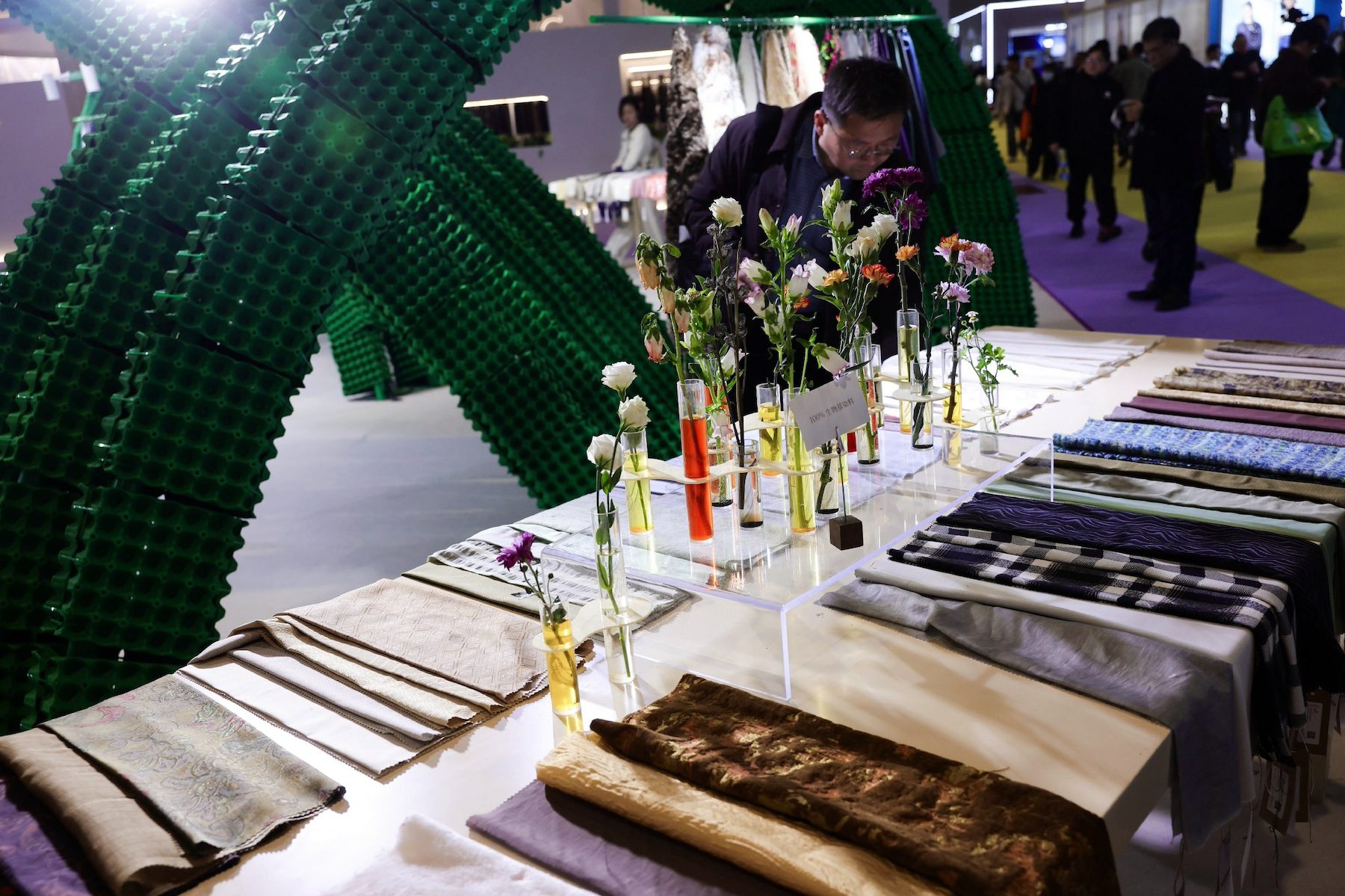
You can touch fabrics at the show

Innovative fabrics, like Tencel, are on exhibit
China is a critical hub for the global clothing and textiles markets, and is paving the way for the fashion industry’s functional, digital, and sustainable evolution. The CEO of Italian luxury natural fibre garment company Lanificio Colombo, Andrea Rossi says, “Consumers are no longer seeking the ostentatious, instead placing value on products that are luxurious but also sustainable, easy to wear, and comfortable.”
Wilmet said: “Although the market landscape is presenting several challenges, the industry continues to put its faith in Intertextile Apparel.” She mentions excellent exhibitor return rate and steady visitor flow, with international participation remaining strong.
A key anchor – and growing focus – is the expanded Econogy Hub, featuring everything from certified fibre and fabrics to testing and traceability solutions. This allows buyers to start their sourcing journey in one place, knowing which sustainability claims they can trust. Wilmet says, “A practical way the show helps buyers evaluate claims is by showcasing certification and verification bodies”.
verification bodies”.

The name for this sustainability hub combines ‘economy’ and ‘ecology’

Oeko-Tex is an independent testing and certification system
For example, the Ecocert Pavilion highlights standards and certifications widely used in textiles, helping buyers to distinguish between marketing language and audited practices. The show also places strong emphasis on traceability and transparency tools, which are increasingly important. Wilmet mentions Lectra company TextileGenesis, an exhibitor in the Econogy Hub. She says that it represents the shift towards supply chain traceability, where fibre-to-fabric tracking, transaction records, and material claims can be systematically validated.
In addition, education is another anti-greenwashing pillar which the show offers through its fringe programme. Leading experts presented topics covering fashion, performance, sustainability, and innovation to over 4,500 participants at 50 events, while nearly 1,500 samples were displayed at the Intertextile Directions Trend Forum, the Econogy Hub Display Area, the new Pet Boutique, and The CUBE at Functional Lab – making on-trend and cutting-edge fabrics quick to compare, and relevant exhibitors easier to find.

Econogy Hub hosted panel discussions including Redefining Fashion: Waste is the New Resource moderated by Nissa Cornish. Image: Intertextiles Shanghai
Nissa Cornish, the executive director of Redress in Hong Kong moderated the talk “Redefining Fashion: Waste is the New Resource”. She says, “The panel gave really useful insights into the different perspectives of designers, NGOs and manufacturers, showing their challenges and the opportunities to work together to meet them.”
Scale and sustainability cannot rely on narrative alone. At Intertextile, the shift toward verification, traceability and shared standards suggests an industry beginning to build systems of accountability alongside growth. During current troubling times and the challenges the industry faces, it’s important to gather and share knowledge. To build resilience, it’s important to learn about the latest developments in textiles and innovations. Intertextile Shanghai Apparel Fabrics offered this opportunity.
Upcoming trade shows
- Intertextile Shenzhen Apparel Fabrics / Yarn Expo Shenzhen
9 – 11 June 2026, Shenzhen (Futian). For more information read here - Intertextile Shanghai Apparel Fabrics – Autumn Edition / Yarn Expo Autumn
25 – 27 August 2026, Shanghai. For more information read here - All images supplied