
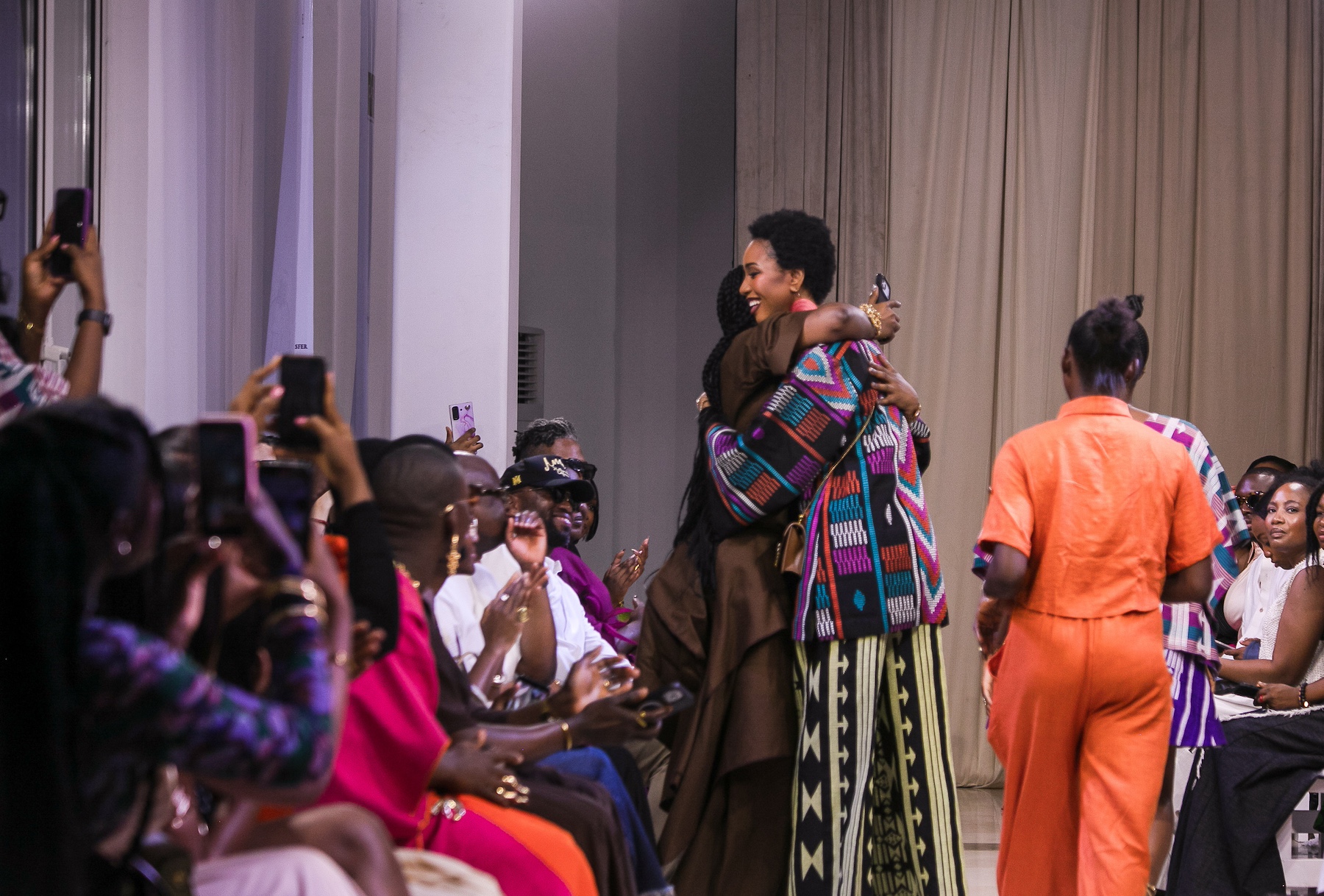
At a chaotic time in history, Woven Threads offers clarity and inspiration. Titled Crafted, the seventh edition of this annual Lagos-based event positioned African fashion not as a participant in extractive global fashion systems, but as a site of innovation, regeneration and material intelligence.
“This is a platform that is committed to challenging us to think deeper, to act more intentionally with the conviction that Africa is not just participating in the future of fashion but actively shaping it,” said founder Omoyemi Akerele in her opening address on 10 April 2026. Woven Threads is a curated programme of talks, an exhibition and fashion presentations hosted by Lagos Fashion Week.
When overproduction and hyper-consumption of unsustainable clothing is exacerbating the crises of our era, taking a close look at African fashion is not only inspirational but instructive. Woven Threads presented African fashion and textiles as an antidote to the mass produced, synthetic fast fashion that is driving climate change and destroying environments. There was evidence of curiosity, innovation and a commitment to ethical production and environmental responsibility.
Exhibition

This is Us exhibit called Under the Veil. Image: Kola Oshalusi
The Crafted exhibition encouraged visitors to experience African fashion up close – it was possible to feel the fabrics. Evident in Kenyan creative director Sunny Dolat’s curation was his provocation to think not about how fashion could be made differently, but “how differently it is already being made”.
The exhibition was divided into three sections: Labour, Heritage and Reimagined Systems. Throughout the exhibition Sunny’s curatorial lens placed equal emphasis on “makers, process, and the future of material recovery and reuse”.
The first section foregrounded Labour, bringing into visibility the processes, techniques and work that are implemented to create garments. It guided our attention to how the labour in fashion begins with soil, and how knowledge passes from hand to hand.
In this section, This is Us exhibited the process and history behind “one of West Africa’s most significant ceremonial textiles, the Tukurdi cloth, also known as the Tugelmust”. This indigo-dyed cotton veil used by Tuareg men is traded across the Sahel region from the Atlantic Ocean to the Red Sea. Also on exhibit was a reimagined Babban Riga robe made from the same cloth as the veil. Historically worn as a marker of prestige, “the garment embodies status through scale and craftsmanship”.
The second section, titled Heritage, honoured the passing of knowledge, not only from hand to hand, but from generation to generation. Heritage is not always presented in pattern, colour and symbols but can be transferred quietly through “proportion, in restraint, in construction”. Here, we were required to look a little longer and think a little deeper about the skills and methods learnt from previous generations. For example, IGC Fashion uses Lubugo, a UNESCO-recognised textile native to the Baganda people of Central Uganda, made out of the bark of the Mutuba tree (Ficus natalensis). This heritage textile is combined with upcycled textiles into a patchwork cloth to create overcoats, vests and trousers. Other exhibits featured dyeing techniques, batik, embroidery, beading and weaving.

Nkwo Design. Image: Kola Oshalusi
The final section of the exhibition, Reimagined Systems was proof that there are ways of making and producing clothes that not extractive. Instead they are circular and regenerative. It showed evidence of respect for place and people. Here, two garments designed by Nkwo Onwuka illustrated how she reclaims discarded textiles and transforms them into new textiles. The Or Foundation showed examples of various upcycling designers and artists who work in Kantamanto market in Ghana.
Two accessory brands use common waste materials to create beautiful new products: Handbags by Tuntunre showcased the use of discarded denim while Dunsin Crafts handbags showed examples of handbags made from plastic water sachets.
The exhibition was an expression of many things, including two points made during the event. Commenting on fashion as a reflection of values, Renée Neblett said, “African fashion is not only showing us a way to do fashion in the future, it’s also showing us a way to live.” Sunny commented that fashion is magic: you plant a cotton seed which becomes a cotton shirt. His exhibition was testament to this magic. It offered a deeper understanding of the different processes – from the seed to the cloth – and all the hands that create fashion.
Talks

Curator Sunny Dolat in conversation with projects director Adaeze Oguzie. Image: Kola Oshalusi
Omoyemi set the tone of the talks in her opening address when she referenced designers who continue to build bridges across communities and who honour craft while reimagining its place in contemporary fashion. Themes of community, craft and the future of fashion thread throughout the programme. The speakers from a wide range of businesses, fashion brands and innovations were proof of Omoyemi’s statement that Africa is actively shaping the future of fashion.
In conversation with project director of Style Files and Lagos Fashion Week Adaeze Oguzie, Sunny explored the “tensions between heritage, contemporary making, and the evolving systems shaping African fashion today”.

Berni Yates and Peter Acha in conversation with journalist Ugonna-Ora Owoh. Image: Kola Oshalusi
There was a discussion moderated by journalist Ugonna-Ora Owoh with Berni Yates from Central Saint Martins and Peter Acha creative director of Pettre Taylor about The Makers Camp knowledge exchange between British and West African students who explored ideas of decoloniality, waste, repair and care.
During the Material Futures discussion, Nkwo had an opportunity to talk about her studio as social enterprise and hub of textile innovation. Achenyo Idachaba-Obaro founder of MithiMeth spoke about converting the invasive aquatic weed, hyacinth, into commercial products. Founder of Pneedles Joshua Attat spoke about making buttons and beads from plastic waste. Founder of Roundabout Zara Odou has done groundbreaking research into how to improve the sustainability of traditional artisanal dyeing methods.
Director of Africa for The Earthshot Prize Simone Smit moderated a discussion – The Africa Fashion Compact x The Earthshot Prize – between Omoyemi, founder of Kokrobitey Institute Renée Neblett, founder of Dakar Fashion Week Adama Ndiaya, founder of Owo Festival Sammy Oteng, Sunny Dolat, founder of Hub of Africa Mahlet Teklemariam and me. We discussed the power of collaboration, financial structures, creating value on the continent, pan-African trade and consumer behaviour.
Across all the talks – from upcycled designers and natural dye practitioners to sustainability researchers and fibre innovators – everyone was willing to share their challenges and successes.
Fashion presentations
Over two days, there were fashion presentations by 12 designers (see below) giving the audience and visitors an opportunity to see contemporary African designers. Nothing looked fast and mass-produced. Instead, there was a rich tactility in the collections showing careful processes of weaving, dyeing and making. We saw traditional silhouettes and indigenous materials combined with contemporary elements.
Collectively, the presentations, the exhibition and talks showcased what Omoyemi spoke about in her opening keynote when she said, “Craft is a language rooted in respect for materials, for people and for the earth.”
Woven Threads offered inspiration. But that is not all. It also asked how do we preserve these legacies, traditions and innovations. Furthermore, we need to take care to replenish these because as Omoyemi said, “Preservation without renewal is not enough.”
Below is one look from each of the 12 presentations:

Hertunba. Image: Kola Oshalusi

Ajanéé Studio. Image: Kola Oshalusi